


Published
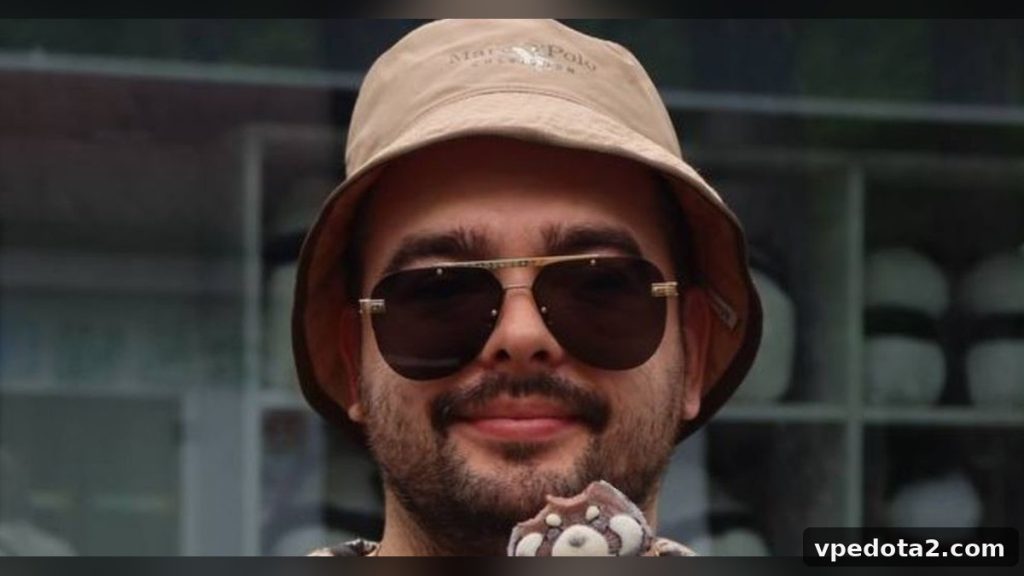
Oleg “Stray” Bocharov expects Dota 2 to contract gradually rather than disappear. The streamer believes player activity and Twitch interest will continue to fall over time, mainly because too few newcomers replace an ageing audience. At the same time, he expects the game to remain recognisably Dota and to function for at least another ten years. His forecast is cautious, but it is not an obituary.
Stray’s argument begins with demographics rather than a single patch, tournament or business decision. Players who formed their habits around Dota years ago are moving beyond their twenties. Work, families and other responsibilities reduce the time some of them can devote to long matches. If the flow of new players remains smaller than the number of veterans leaving or playing less often, the total audience can decline even when the remaining community still cares deeply about the game.
That mechanism is important because it describes a slow imbalance. Stray did not announce that servers, professional events or broadcasts are about to stop. He spoke about a gradual reduction in online activity and Twitch viewing. Those are related signals, but neither alone defines whether Dota remains healthy enough to support matchmaking, content and competition. A smaller audience can still be active; the key question is how quickly it renews itself.
An ageing audience changes the growth problem
Dota asks more of a beginner than many games. A newcomer faces a large hero pool, specialised vocabulary, long matches and teammates who may already understand years of accumulated conventions. Stray did not list those barriers individually, so they should not be treated as his quoted explanation. His explicit point was simpler: the intake of new players is minimal compared with the veterans who gradually step away.
That framing shifts attention from retaining every existing player to creating a replacement path. Tutorials, welcoming matchmaking and reasons to follow the game before mastering it would all be relevant ways to test the problem, but Stray did not claim that any one solution would reverse the trend. His forecast remains a diagnosis offered during a discussion, not a published growth study or an internal plan from Valve.
The optimistic half of his view is easy to miss. Stray believes Dota can continue in a stable form for a long time even while its headline numbers move downward. He used the continued existence of the original Dota community as an example of how a dedicated audience can preserve a game well beyond its period of widest attention. Longevity, in this sense, does not require constant expansion.
A slow decline and a functioning ecosystem can coexist. Matchmaking may remain active, established creators can retain loyal viewers, and professional events can matter to a smaller core. The risk is not an immediate ending but a thinner pipeline: fewer first-time players, fewer people discovering broadcasts and fewer future competitors emerging from public games. That is why Stray’s demographic explanation deserves more attention than the dramatic language of a dying game.
What would confirm or challenge the forecast
Stray did not provide current concurrent-player or viewing figures, so his prediction should not be converted into invented statistics. A serious test would compare long-term player activity, the share of new accounts that remain active, viewing patterns across major and ordinary events, and the rate at which new professional players reach high-level competition. Movement in one metric would not settle the whole question.
The forecast could also be challenged if Dota begins attracting and retaining a larger new audience. A successful onboarding change, a new way to experience matches or a competitive format that reaches unfamiliar viewers would weaken the assumption that departures must exceed arrivals. Until such evidence appears, Stray expects familiar Dota to continue with a gradually smaller crowd around it.
- The prediction concerns gradual decline, not an immediate closure.
- Stray links the trend to an ageing audience and limited replacement by newcomers.
- He still expects Dota to remain active for at least another ten years.
| Claim | Status | What is not established |
|---|---|---|
| Player activity will fall slowly | Stray’s forecast | No rate or exact total was supplied |
| Twitch interest will decline | Stray’s forecast | No viewing dataset was cited |
| Dota will remain active | Stray’s expectation | Not a guarantee from Valve |
Stray’s position is best understood as a warning about replacement, not a prediction of sudden failure. Veteran players cannot remain equally active forever, and a game with few newcomers will eventually become smaller. He nevertheless sees enough cultural and community durability for Dota to continue through that change. The decisive question is whether the next generation begins arriving faster than he currently expects.
 EN — English
 RU — Русский
Comments (0)